

Fixed Rate Investment Loans
A fixed rate investment loan keeps your repayments and tax deductions predictable for 1–5 years, so you’re not second-guessing whether next quarter’s rate rise will wipe out your negative gearing advantage. Andy compares the fixed options, explains when certainty beats flexibility, and walks you through break costs so you know exactly what you’re signing.
Andy made it straightforward and simple and represented us in a way that put our best foot forward.

Google Review
For the entire process Andy was a wealth of knowledge and provided excellent support, guidance and timely information.

Google Review
Top bloke, great service and locked in a great deal for us. Walked us through each step and had everything finalised really quickly.

Google Review
Andy made our refinancing and purchase of a new home seamless and within our guidlines.

Google Review
Let's Chat
Complete the form below and Andy will be in touch to discuss your finance needs.
Related Fixed Rate Investment Loan Services

Variable rate investment loans
Flexible investment loan rates with no exit fees — make extra repayments, access offset, or refinance anytime
Variable rate investment loans →
SMSF property loans
SMSF property loans explained — how to buy investment property through your super fund.
SMSF property loans →
Low Deposit Investment Loans
Most investors think they need a 20% deposit for an investment property. You can get approved with as little as…
Low Deposit Investment Loans →
Offset and redraw investment loans
Offset accounts and redraw facilities both lower interest costs on your investment loan, but they work differently—and lenders price them…
Offset and redraw investment loans →
Line of Credit / Equity Loans for Investing
Turn your home equity into your next investment deposit without selling or saving from scratch
Line of Credit / Equity Loans for Investing →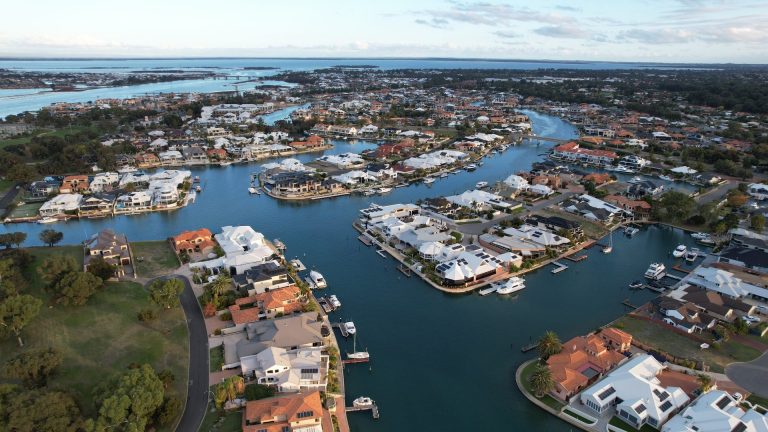
Interest-only investment loans
Interest-only investment loans let you pay only the interest for a set period, keeping repayments low and cash flow high.…
Interest-only investment loans →We query over 30 lenders to find an outcome that’s right for you











What is a Fixed Rate Investment Loan?
A fixed rate investment loan locks your interest rate for a chosen term—typically 1, 2, 3, 4, or 5 years—on a loan used to purchase or refinance an investment property. Your monthly repayments stay the same for the entire fixed period, regardless of what the Reserve Bank does with the cash rate.
The fixed rate is set at the time you settle or refinance, and you nominate the term length upfront. Once the fixed term expires, the loan automatically reverts to a variable rate (usually the lender’s standard investment variable rate) unless you negotiate a new fixed term before rollover.
Why investors fix: certainty on cashflow and tax deductions. When you’re negatively geared and claiming interest as a deduction, knowing your exact interest bill for the next three years makes budgeting and tax planning straightforward. You’re not surprised by a 0.5% rise that adds $140/month to a $400k loan mid-year.
Key limitation: most fixed investment loans restrict extra repayments to $10,000–$30,000/year without penalty, and you can’t redraw or access offset during the fixed term. If you sell, refinance, or pay down a large lump sum during the fixed period, the lender charges a break cost (early exit fee) to recover the interest they expected you to pay.
Fixed rates suit investors who want stable holding costs, plan to keep the property for at least the fixed term, and aren’t relying on offset or redraw flexibility during that window. They’re common among first-time investors, negative-gearing portfolios with tight cashflow, and anyone buying in a rising-rate environment who wants to cap their worst-case repayment before settlement.

Fixed vs Variable Investment Loans: Comparison
Here's how a fixed rate stacks up against a variable rate investment loan on the features investors care about:
| Feature | Fixed rate investment loan | Variable rate investment loan |
|---|---|---|
| Interest rate | Locked for 1–5 years | Moves with lender's variable rate |
| Repayments | Same dollar amount every month | Change when rate changes |
| Extra repayments | Capped at $10k–$30k/year | Unlimited |
| Offset account | Usually not available | Available on most loans |
| Redraw | Usually not available | Available on most loans |
| Break cost | Charged if you exit early | No break cost |
| Interest-only term | Available for fixed term | Available, typically 1–5 years renewable |
| Portability | Limited; often triggers break cost | Usually portable to new security |
When fixed wins
You're buying in Mandurah or Perth suburbs like Baldivis or Rockingham where rents are stable, you're holding for at least three years, and you want to lock in today's rate before it climbs. You're not planning to sell or refinance inside the fixed term, and you don't need offset or large extra repayments.
When variable wins
You might sell or upgrade within two years, you want offset to park your emergency fund tax-free, or you're making large lump-sum repayments from bonuses or business income. The investment loan article covers the broader loan types; this page focuses on the fixed-rate choice within that family.
How Fixed-Rate Investment Loans Work
From application to rollover, here's what happens when you lock in a fixed rate on an investment property loan.
Choose Your Fixed Term at Application
When you apply (or refinance), you nominate a fixed term: 1, 2, 3, 4, or 5 years. Longer terms usually carry a slightly higher rate because the lender’s interest-rate risk increases. Andy compares the lender’s current fixed-rate card across all terms so you see the rate difference between a 2-year and 5-year lock.
Lock the Rate at Formal Approval or Settlement
Most lenders let you lock the fixed rate either at formal approval (conditional approval issued) or at settlement/drawdown. If you lock at approval, you’re protected if rates rise before settlement—but you’re also committed if they fall. Andy flags the lock timing in your approval letter so you know the deadline.
Repayments Stay Constant for the Fixed Term
Once fixed, your monthly repayment doesn’t change regardless of Reserve Bank moves. If you’re on interest-only, the interest component is fixed; if principal-and-interest, both interest and principal portions stay the same. This makes your annual tax deduction predictable to the dollar.
Annual Extra-Repayment Cap Applies
You can make extra repayments up to the lender’s annual cap (commonly $10,000–$30,000) without penalty. Anything above that triggers a break-cost calculation. The extra payments reduce the principal but don’t change the fixed monthly repayment—they shorten the loan term after the fixed period ends.
Loan Reverts to Variable at the End of the Term
30–90 days before your fixed term expires, the lender sends a rollover letter with their current fixed and variable rates. You can re-fix for another term, switch to variable, or refinance to a new lender. If you do nothing, the loan automatically moves to the lender’s standard variable investment rate.
Break Cost Applies if You Exit Early
If you sell, refinance, or repay more than the annual cap during the fixed term, the lender calculates a break cost: the present value of the interest they’ll lose because you’re leaving early. Break costs can be $0 (if wholesale rates have risen since you fixed) or $5,000–$20,000+ (if rates have fallen). Andy requests a break-cost estimate before you commit to selling or refinancing mid-term.

Fixed Rate Investment Loan Questions
Most lenders do not offer offset on fixed investment loans. A handful of lenders (fewer than 10% of the panel) allow a partial offset during the fixed term, but the offset balance is capped and the rate premium is higher. If offset is critical—because you’re parking rental income or business cash—stick with a variable loan or split: part fixed (no offset), part variable (with offset).
You’ll pay a break cost if the lender’s wholesale interest rate has fallen since you fixed. The lender calculates the present value of the interest shortfall for the remaining fixed period. Break costs range from $0 (if rates rose) to $10,000+ on a $500k loan (if rates fell 1%). Andy orders a break-cost estimate before you list, so you know the exit penalty upfront and can decide whether to wait or sell now.
Yes, up to the lender’s annual cap—commonly $10,000–$30,000/year without penalty. Repayments above the cap trigger a break-cost calculation. The extra payments reduce principal but don’t lower your fixed monthly repayment; they shorten the loan term after the fixed period expires.
1 year if you expect rate cuts soon or might sell within 18 months. 3 years if you’re holding medium-term and want a balance of certainty and flexibility—this is the most popular investor term. 5 years if you’re building long-term passive income, you’re certain you’ll hold, and you want zero rate surprises. Longer terms carry higher rates (0.3%–0.5% premium over variable) and larger break costs if you exit early.
A break cost is the fee the lender charges if you exit a fixed loan early (sell, refinance, or repay above the annual cap). It’s calculated using the Economic Cost Method: the lender compares your fixed rate to the current wholesale rate for the remaining term. If wholesale rates have fallen, you owe the interest difference (potentially $3,000–$20,000 depending on loan size and time remaining). If rates have risen, break cost = $0. Andy requests a formal estimate before you make any move.
Yes, but you’ll pay a break cost to your current lender to exit the fixed term, plus any discharge and application fees. Refinancing makes sense if the rate saving with the new lender (plus any cashback) exceeds the break cost and fees. Andy calculates the breakeven: if your current fixed rate is 6.49% with 2 years remaining, and a competitor offers 5.89% variable, the 0.6% saving might cover a $4,000 break cost in 8–12 months.
Yes. Fixed investment loan rates are typically 0.2%–0.4% higher than equivalent owner-occupier fixed rates, because lenders see investment loans as higher risk (rental income can drop, vacancy can occur). The gap is consistent across all fixed terms. You can’t get an owner-occupier rate on an investment property—lenders verify loan purpose at application and settlement.
30–90 days before expiry, the lender sends a rollover letter with current fixed and variable rates. You can re-fix for another term (1–5 years), switch to variable, or refinance to a new lender. If you do nothing, the loan automatically moves to the lender’s standard variable investment rate—usually 0.3%–0.6% higher than their best variable rate. Andy reviews your options 60 days out so you’re not stuck on the default rate.
Only by paying the break cost. Some lenders allow an internal switch (from fixed to variable within the same loan) without a full refinance, but the break cost still applies. It’s the same calculation as if you were refinancing or selling. Switching makes sense only if rates have risen significantly since you fixed, so the break cost is zero or minimal, and you now want offset/flexibility.
Yes. Most lenders offer interest-only during the fixed term (1–5 years), then revert to principal-and-interest when the fixed term expires unless you negotiate an extension. Interest-only investment loans are common because they maximise your tax deduction and minimise monthly outflow. The interest-only period matches the fixed term—if you fix for 3 years, you get 3 years interest-only, then it switches to P&I at rollover.
Most lenders tier fixed rates by LVR: loans above 80% LVR pay a premium (commonly +0.2%–0.4%) because they carry lenders mortgage insurance (LMI). Below 80% LVR, you get the standard fixed rate. If you’re at 85% LVR and paying LMI, the fixed rate might be 6.49% instead of 6.19%. Once your LVR drops below 80%—either through property appreciation or principal paydown—you can refinance to a lower rate.
Yes—most lenders allow a loan split. Common approach: 50% fixed (for rate certainty), 50% variable (for offset and extra repayments). You nominate the split at application or refinance. Each portion has its own loan account, rate, and fee structure. The fixed portion locks in your base holding cost; the variable portion gives you flexibility to make lump-sum payments or use offset for tax-free savings. Andy sets up splits for investors who want both stability and liquidity.


Reviewed by
Credit Representative & Mortgage Broker
The information on this page has been reviewed for accuracy by Andy Iriks, a Credit Representative & Mortgage Broker at Wanna Finance. It is general information only.